
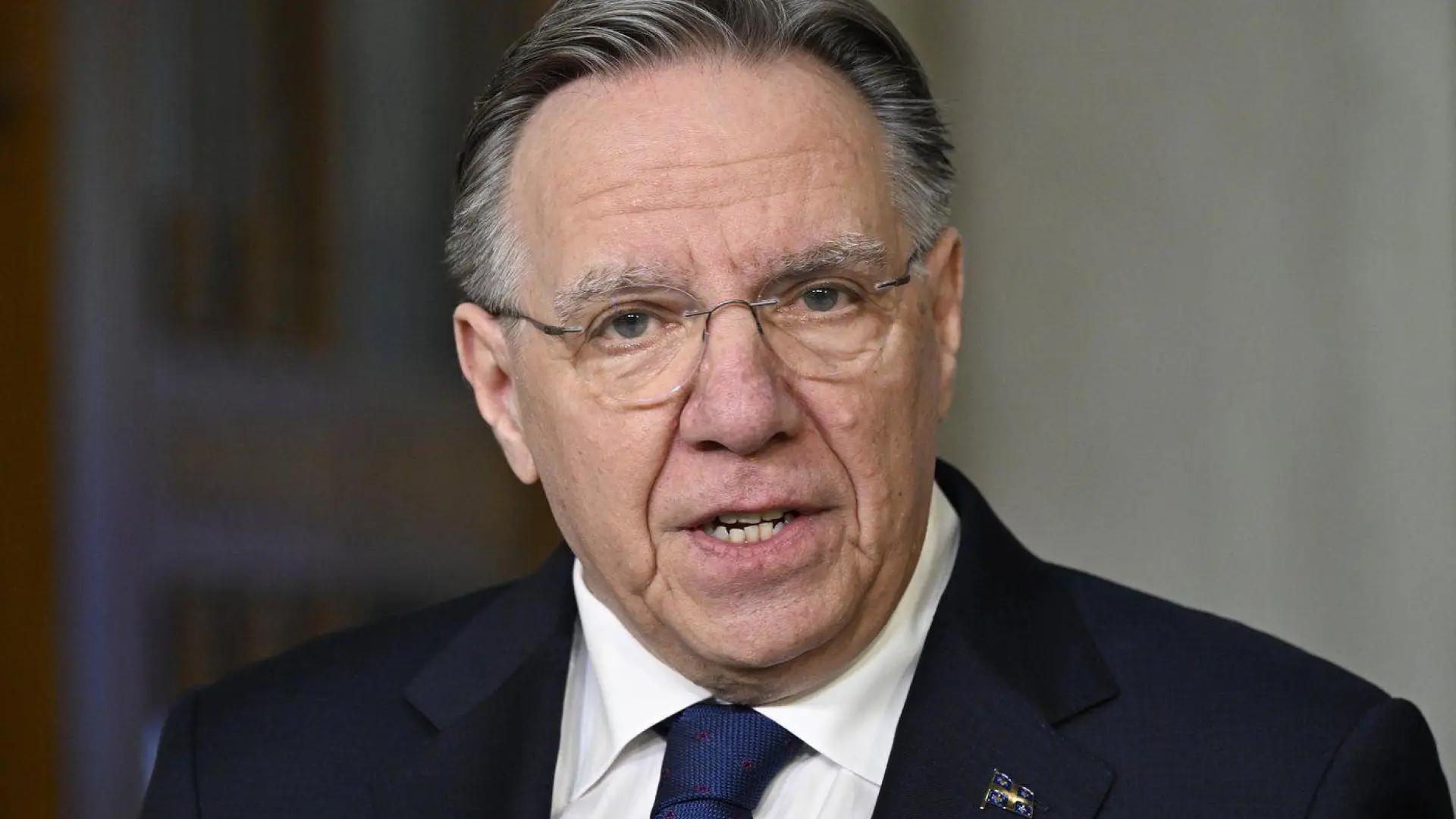
Quebec politics has a way of shifting quickly, turning safe bets into question marks overnight. Only weeks ago, the Coalition Avenir Québec looked destined for electoral demolition. François Legault’s government was tired, his coalition divided and running out of friends. Then Legault stepped aside, and suddenly the story changed. What felt like an obituary now reads more like an audition. Can a new leader do for the CAQ what Mark Carney did federally: reset the narrative, rebuild confidence, and hold together a fractured party?
It is possible. But it will require more than a fresh face. It will demand a leader with the authority to break with parts of the Legault legacy to expand the party’s appeal while preserving the alliance that brought the CAQ to power.
The CAQ was founded by François Legault as a middle path between traditional sovereigntist and federalist forces, the Parti Québécois and the Quebec Liberal Party. It offered voters an alternative to the old constitutional trench war: proud of Quebec’s identity as a nation, yet focused on jobs, investment, and competent government rather than another referendum. That promise rested on a fragile balance that has now frayed, and the next leader will have to hold it together while resisting the gravitational pull of the old poles.
The risk of a CAQ split is real. On the day of his resignation, Legault warned his team not to let the leadership race pit the nationalist and economic wings against each other, reminding them that the party exists only as an alliance of both. Yet the early signs point precisely in that direction.
The challenge for any new leader will be daunting: to keep that coalition together while reconquering a francophone electorate now pulling in opposite directions.
Sitting on one flank of the CAQ’s accessible voter pool are nationalist voters who have drifted back to their traditional home, the Parti Québécois. Many fear that a mistimed third referendum, launched amid Trump-era instability, could bury the dream of statehood for a generation.
On the other stand economy-focused, right-of-centre federalists, disillusioned with Legault and tempted by the provincial Liberals or the upstart Conservative Party of Quebec. Among them are voters who feel the CAQ has drifted from its original purpose, trading its promise of pragmatic governance for an approach that has needlessly exacerbated divisions within Quebec civil society, not only with religious and ethnic minorities, but also with unions, the medical professions, and the economic engine that is Montreal.
There is also a quieter, rarely mentioned constituency: demobilized sovereigntists uncomfortable with both the CAQ’s and the PQ’s tone on diversity, inclusion and immigration. These voters remember a less exclusionary form of Quebec nationalism rooted in civic belonging and shared culture. Between the PQ and the CAQ, they have found no comfortable home for some time.
Whoever ultimately runs in the CAQ’s leadership contest, it will test whether the CAQ doubles down on its harder edges or pivots toward a less exclusionary economic lane.
As the party weighs its options, it should reflect on a fact that has become inconvenient for hard-line nationalists in both the PQ and the CAQ: Mark Carney, an anglophone with an occasionally hesitant command of French, remains the most popular politician in Quebec, polling far ahead of any presumptive CAQ candidate. That reality is a signal. Quebecers currently appear less drawn to hard-nosed nationalism than to competence, stability, and practical leadership capable of confronting a volatile geopolitical environment. The CAQ would be wise to heed that mood as it chooses between identity brinkmanship and a steadier focus on economic security.
Simon Jolin-Barrette is the obvious champion of the party’s nationalist wing and Legault’s presumed dauphin. He is the logical choice for those who believe the CAQ’s best strategy is to win back nationalist voters now parked with the PQ. But that would mean wagering that Quebecers are in the mood for a nationalism-lite alternative at a moment when many voters want economic security more than identity battles. More of the same is unlikely to meet what the moment requires. In fact, Legault and Jolin-Barrette have spent much of the past year doubling down on precisely that terrain, and their party has appeared disconnected and unfocused as a result. The identity pond, for now, appears largely fished out.
The CAQ’s economic wing could be represented by candidates like Christine Fréchette, Eric Girard, Sonia Lebel, or even someone from outside the party. Choosing that direction would signal that the CAQ sees expansion rather than retrenchment as its best chance of survival, anchoring the party in the promise of sound economic management, stable governance, and a more unifying message capable of resonating across Quebec society.
Legault’s decision to step aside may prove his final service to the movement he created. With a new leader, the script can still be flipped. If the party finds someone capable of holding the coalition together while speaking to a broader audience, it can survive and perhaps govern again. If it does not, Legault’s experiment will end not with a transition, but with an epitaph.
Eric-Antoine Ménard is Vice-President at NorthStar Public Affairs and head of its operations in Québec
The views expressed are those of the author(s). National Newswatch Inc. publishes a range of perspectives and does not necessarily endorse the opinions presented.