


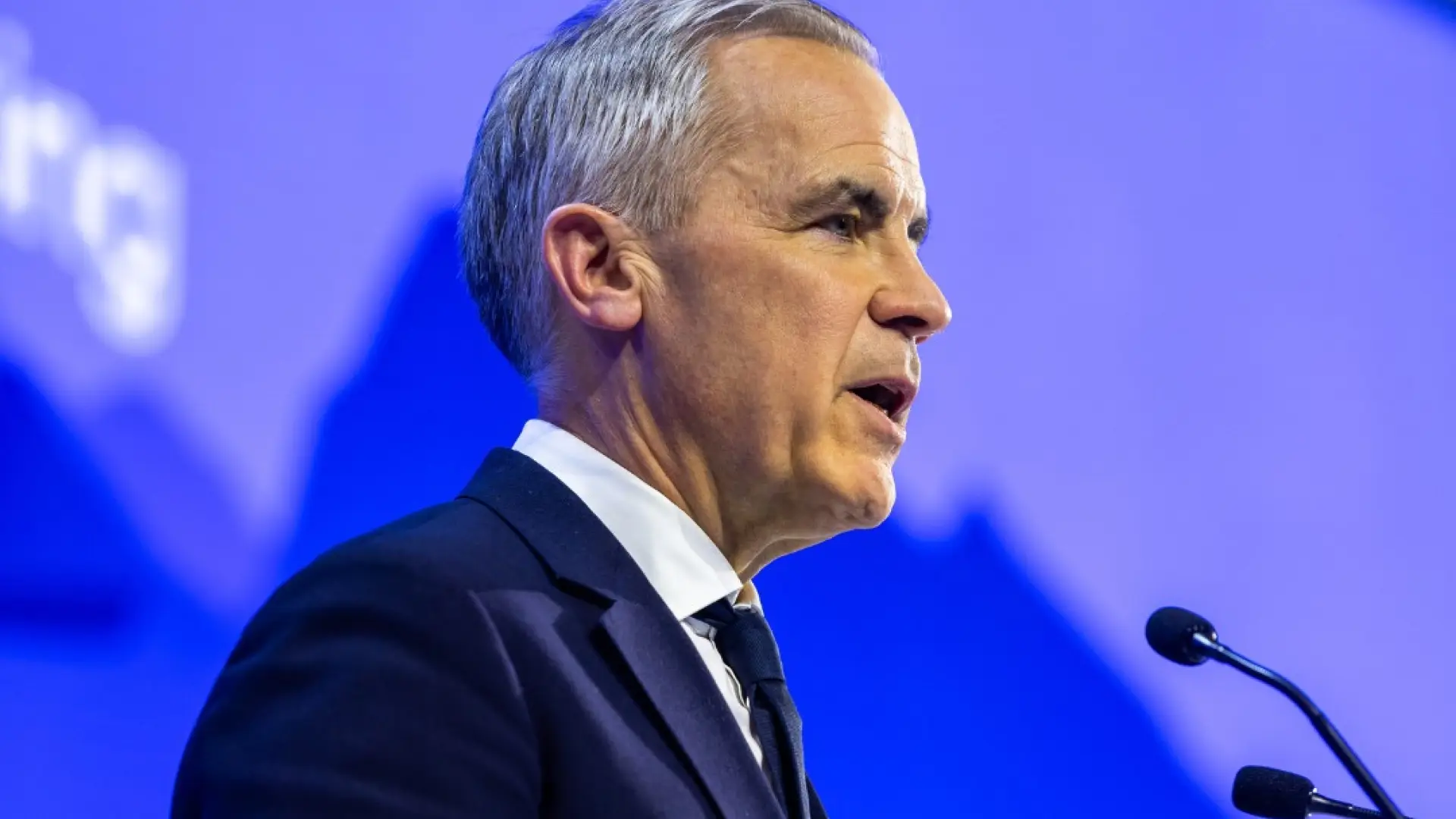
Prime Minister Mark Carney’s speech at the World Economic Forum in Davos, Switzerland, drew significant international attention. It also struck a raw nerve in Washington. It came as President Donald Trump stepped back, at least for now, from his pressure campaign around Greenland after strong resistance from European allies and others including Canada. That underscored how quickly Arctic issues can move from rhetoric to real geopolitical tension.
American territorial expansion has long been part of its national story. Thomas Jefferson is remembered for increasing the size of the United States through the Louisiana Purchase, William Seward for the acquisition of Alaska, James K. Polk for annexing a large part of Mexico, and William Mckinley for acquiring Spanish possessions including Hawaii. Trump has shown a clear interest in legacy, scale, and strategic impact. From that perspective, the Arctic offers both, tangible value, and strategic importance. In this worldview, land and leverage are closely linked.
Canada should be clear-eyed about what this means. Arctic sovereignty is under renewed scrutiny, and these pressures are not going to evaporate. Trump’s former Chief Strategist and Senior advisor Steve Bannon once warned that Canada’s military weakness in the Arctic is our “soft underbelly”. While the language is provocative, it reflects a broader reality. The immediate threat to Canadian sovereignty does not come only from Russia or China, but also, it would seem, from a long-time ally whose approach to power is becoming more transactional even as we share the most integrated economy anywhere in the world.
Geography sharpens the risk. Ellesmere Island sits next to Greenland, part of a chain of Arctic Islands stretching between Greenland and Alaska. All are Canadian. All are strategically vital. In Donald Trump’s worldview, these islands could be framed as necessary to the security of the Western Hemisphere, and therefore are attractive to the United States. Using that logic, arguments about capability and presence can begin to overshadow questions of jurisdiction, leaving Canada at risk of being treated as secondary to broader strategic considerations.
Canada controls the largest share of the Arctic after Russia. That alone draws attention, particularly to the Northwest Passage. Canada maintains that the Passage represent internal waters. The United States has never formally accepted that claim, arguing instead that it is an international strait. For decades, this disagreement was managed quietly, through diplomacy, cooperation, and restraint.
In a more transactional world, the Northwest Passage and its surrounding islands become leverage. It is a shipping lane that can shorten global trade routes as ice recedes. It is a strategic corridor that tests whether Canada can enforce sovereignty, not just assert it. Legal arguments matter far less if presence on the ground is thin.
The vulnerability does not stop there. It is compounded by untapped critical minerals, significant energy potential, and underdeveloped infrastructure. Sovereignty is not just about the lines on a map. It is about presence, investment, and control. Greenland has become the blueprint for strategic value. Canada has more territory, more resources and more at stake.
Northern communities in the Northwest Territories, Nunavut and Yukon sit on the frontline of Arctic sovereignty. Yet decades of underinvestment have weakened Canada’s position. Housing shortages, limited port infrastructure, fragile energy systems, and connectivity gaps are not just social challenges. They are strategic ones. For too long, Canada has relied on relationships, and the assumption stability would hold. Trump’s repeated pressure tactics change that calculation.
If Canada intends to protect its Arctic interests, Prime Minister Mark Carney must accelerate investment in northern infrastructure. Ports, roads, airstrips, housing, energy, broadband and military installations must be treated as priority sovereignty assets. Inuit, Dene and Metis leadership must be central to national security conversations. And, in tandem, Canada must bolster its military presence. As the Prime Minister said in Davos, this means “boots on the ground, boots on the ice.”
This moment is not solely about Donald Trump. It reflects a world the Prime Minister described, one in which power is more transactional and less polite. Former Prime Minister Stephen Harper once warned Canadians to “use it or lose it” in terms of the Arctic. Justin Trudeau famously quipped during the 2015 election debates: “Big sled, no dogs”.
The joke has worn thin. If Canada intends to keep the sled, it needs more dogs in the race, and quickly.
Eddie Goldenberg, former Chief of Staff to Prime Minister Jean Chrétien; Martin Green, former Assistant Secretary to Cabinet for Intelligence Assessment at the Privy Council Office and a senior fellow at the Macdonald-Laurier Institute; and Hannah Thibedeau, former CBC News anchor and host of the award-winning podcast The Arctic Edge.
The views expressed are those of the author(s). National Newswatch Inc. publishes a range of perspectives and does not necessarily endorse the opinions presented.