
Canada has always been fortunate to have plenty of natural resources. And for most of our history, we’ve felt this was a powerful advantage. Resources provided great jobs for millions of Canadians over time. Our forests, fish, farming, mines, and energy let us develop skills and technologies and financial markets that bolstered our competitiveness. Tax and royalty revenues helped build affordable and universal health care as well as low-cost, high-quality education.
We learned how to trade, to find customers around the world and get them what they needed, when they needed it, at prices that worked at both ends of a transaction. We built relationships as traders, who could be trusted.
For a while though, about a decade or two ago, it became fashionable in some political circles to wonder if the importance of resources to our economy was becoming a weakness.
The term “sunset industries” was bandied about to describe the extractive sector, as the talk ramped up on connectivity, computing and technology. But this flawed idea now has its own sunset as policy makers and Canadians have come to recognize and appreciate the strategic importance of our natural resources sectors and the people who work in them.
Over 14 years, the Mining Association of Canada has been measuring how people feel about our industry and how we do our work. The trend lines are highly encouraging.
Ten years ago, 68% said they had a favourable opinion of mining companies operating in Canada – today that number is 84%. What’s behind this big shift?
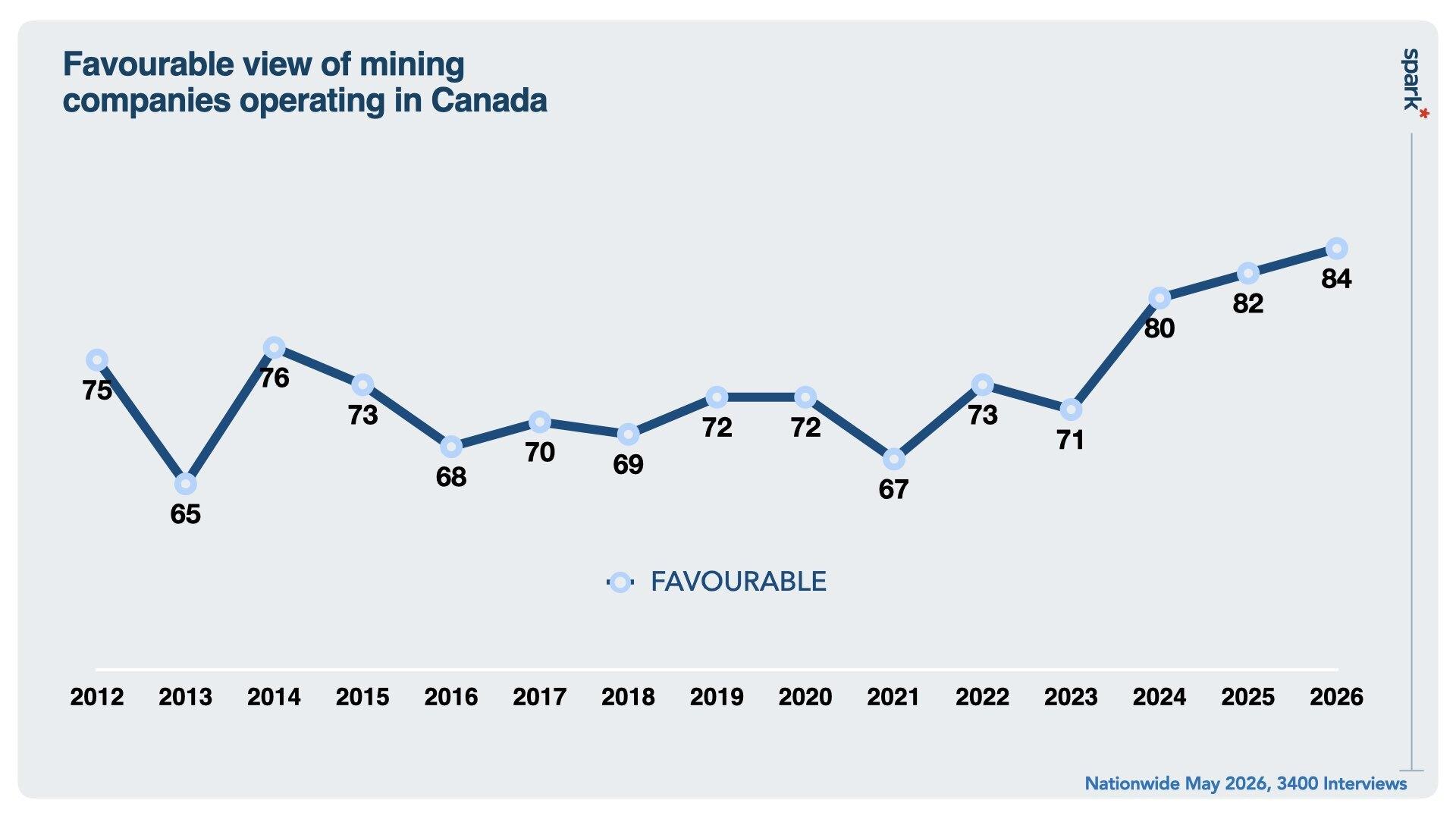
We measure how Canadians see our industry on more than 20 different dimensions. In every single case, more than 80% say the industry does either a good or acceptable job, including 87% who say we fulfill our social responsibilities. People overwhelmingly see the economic contribution, believe employees are compensated and treated well, and that concern for safety is the rule, not the exception.
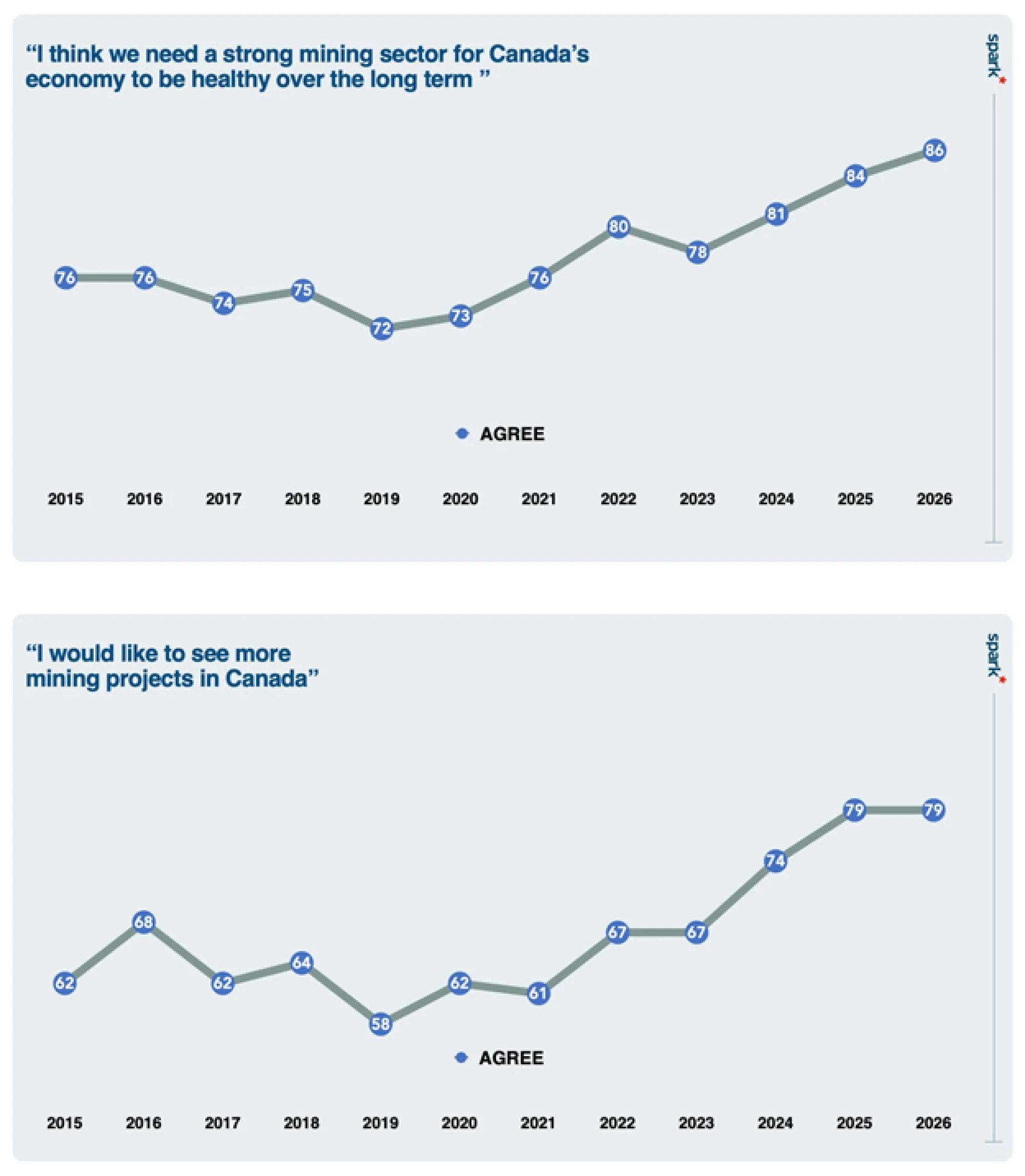
Today, 79% would like to see more mining projects in Canada. That number has climbed 19 points in 7 years, as the world has talked more and more about the role of minerals and metals to the future of the economy, including many modern technologies, clean energy solutions, and economic and political sovereignty.
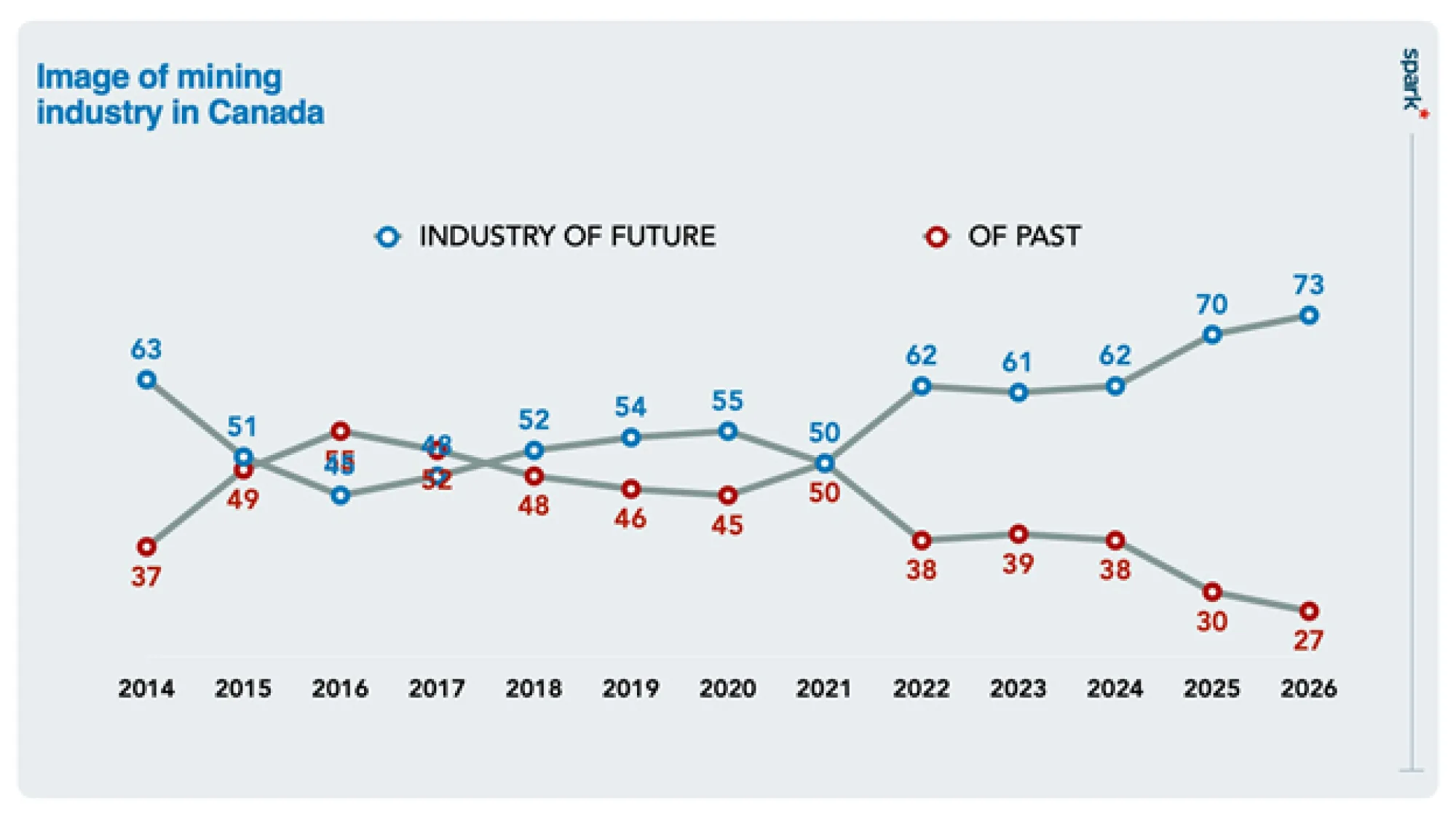
In 2015, half of those we surveyed said mining was an industry of the past, and half thought it was an industry of the future. Today the split is 73% “future”, 25% past. Optimism about how Canada is positioned is growing, even during – or in part because of – the geopolitical uncertainty that prevails today.
I’ve spent fifteen years running the Mining Association of Canada, on behalf of some wonderfully ambitious, effective, respected and responsible companies.
Throughout that time, there was never any doubt about the importance of securing what is often called “social license to operate”. This industry approaches local and Indigenous communities with respect and a spirit of collaboration, knowing that our ability to do our work, hire and retain good people, attract investment and satisfy customers – all these things depend in no small measure on the public believing that we take responsibility seriously. It’s great to see people notice and appreciate the efforts Canada’s miners have been putting in.
Pierre Gratton has served as President and CEO of the Mining Association of Canada since 2011, leading the organization through a period of significant change and renewed recognition of mining’s strategic importance to Canada.
The survey was conducted with 3,055 Canadian residents from March 2nd to March 6th, 2026. The sample includes an Ontario oversample of 1,000 respondents.
A random sample of panelists were invited to complete the survey from a set of partner panels based on the Lucid exchange platform. These partners are typically double opt-in survey panels, blended to manage out potential skews in the data from a single source.
The margin of error for a comparable probability-based random sample of the same size is ±1.77 percentage points, 19 times out of 20.
The data were weighted according to census data to ensure that the sample matched Canada’s population according to age, gender, educational attainment, and region. Totals may not add up to 100 due to rounding.