
Canada is a country at war. Guns may not be involved, but the stakes are staggering.
It’s a war Canadians didn’t begin, with an adversary they would rather not engage, carrying consequences that are so important, both for Canada and the world economic order, that losing is simply not an option.
And it doesn’t have to be an option. If the past few years have taught anything, it’s the importance of resilience, and maximizing your advantages.
Look at Ukraine. When Russia invaded, Vladimir Putin expected to hold a victory parade in Kiev within a few weeks.
Or Iran. When the US and Israel attacked, some commentators declared it was all over before the initial bombing had even stopped.
Instead, the major powers learned some key lessons. For its part, Ukraine has developed the most capable military in Europe, and Iran, whatever we think of its leadership, has proven that geography (and drones) can magnify power and influence.
More importantly, both of these military episodes have re-taught an old truth: War is war. Negotiation is vital, but only from a position of strength. If the one side senses weakness, the path back to peace and prosperity becomes far more fraught.
Prime Minister Mark Carney is particularly well-equipped to lead Canada through this moment. Like other successful wartime leaders, he has managed to rally the public behind him. But resolve is not endless, and fatigue can lead to defeat.
I am not comparing the loss of life in kinetic battles with the loss of wealth in economic ones. In that respect, there is no comparison. That said, a trade war is still a war. The current U.S. administration is bent on powering its way to victory, giving no quarter.
As an American who has devoted much of my career to strengthening the Canada-U.S. relationship, I don't write any of this lightly. And in case anyone is asking, I love my country dearly.
But the field has changed profoundly. For our entire lives up until now, it was axiomatic to say we are neighbours, allies, trading partners, and friends. Our economies are deeply intertwined, our militaries have each others’ backs, and our people cross the common border constantly. In the past, the opening of the Gordie Howe Bridge would have involved the prime minister walking over from the Windsor side to shake hands with the president, who would approach from Detroit. Instead, we have a cancelled ceremony and recrimination.
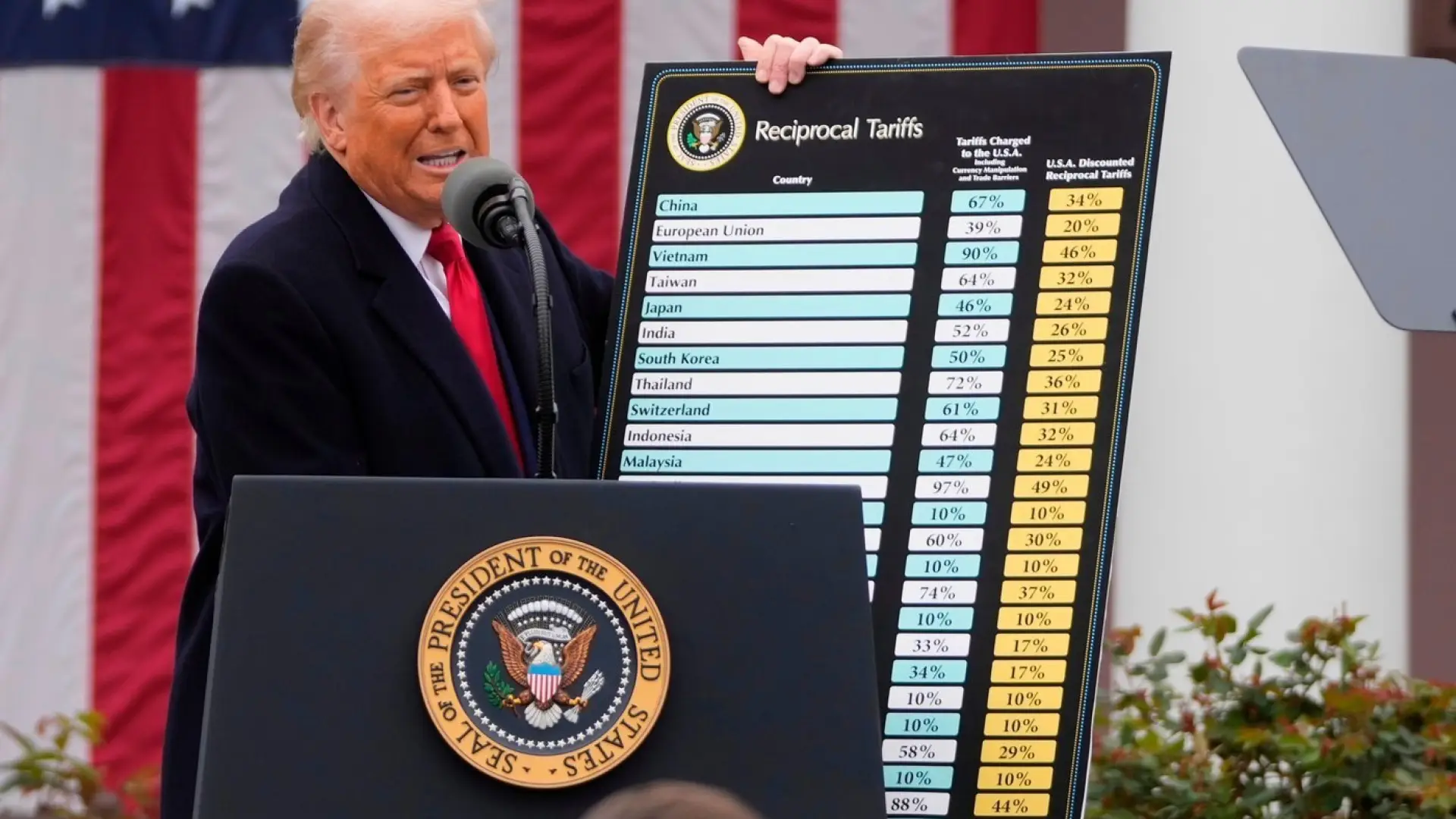
Since President Trump's "Liberation Day" tariff announcements, America’s trading partners have generally chosen one of two approaches. Some have offered concessions, negotiating carve-outs, hoping to flatter or accommodate their way to shelter. Others have responded with stubborn resolve, making clear that economic coercion would carry meaningful consequences.
Canada has chosen neither.
Ottawa has instead taken what might best be described as the Canadian path: principled, proportional, measured, and reasonable. It responded without overreacting. It retaliated without escalating recklessly. It kept the door open to negotiation.
But for the next three weeks, and beyond, Canada will almost certainly have to make harder choices, given the latest tariff deadline imposed by the US. Every single one of the premiers is saying the right things about presenting a united front. Prime Minister Carney’s team is working tirelessly behind the scenes, sorting through a menu of undesirable options.
So, as Canada considers its next moves, I offer the following observations:
At this point, restraint does not appear to be working. If anything, repeated tariff threats from Washington suggest Canada's moderation is being interpreted as evidence that it is unwilling to impose meaningful costs on the United States.
Whether that perception is fair is beside the point. And I am not arguing here that Canada should abandon diplomacy or embrace anti-Americanism. Quite the opposite.
But successful diplomacy requires leverage. Canada has plenty, if it chooses to use it.
The United States depends on Canada. American homes and businesses rely on Canadian energy. American manufacturers need Canadian uranium, aluminum, critical minerals, lumber, and other vital resources that cannot simply be sourced elsewhere overnight.
A perfect example: Corn is America’s largest cash crop. It cannot be grown without potash. Almost all of North America’s potash lies beneath the soil in Saskatchewan. President Trump exempted Canadian potash (and energy, and critical minerals) from his latest tariff threats for a reason.
To be clear, these aren't bargaining chips that Canada should rush to use. But they are bargaining chips. And if they are used, it will be because Canadians are willing to cast aside local concerns in favor of the national interest, closing ranks. Washington needs reminding that leverage is not a one-way proposition.
As noted, this is a war. Canada has options. Those options may include energy, electricity, and strategically important natural resources. The objective is not implementation. The objective is credibility. And to have credibility, Canadians must be clearly prepared to move ahead with the toughest of measures.
Put another way, negotiations rarely succeed when only one side believes the consequences of failure are significant. Canada cannot afford to reinforce the impression that it is willing to endlessly absorb more pain than it is prepared to inflict.
Canada possesses strategic leverage. Now is the time to use it. I dearly want to see a return to the most successful economic co-operation in human history. It would benefit not only Canada, but America, the land that I love.
Maryscott Greenwood is the founder of Ottawa Street Strategy and a former US diplomat. www.ottawastreetstrategy.com